
Knowledge Compounds, Labour Doesn't — Why Knowledge Agents Will Define the Next Decade of Infrastructure Outsourcing
For thirty years, infrastructure outsourcing has competed on scale. AI is about to move the contest to who owns the best organisational knowledge. This is my case for Knowledge Agents — specialist AI experts sitting on a structured knowledge layer built from thousands of engagements. It separates industry consensus from my own hypothesis, answers the 'doesn't Copilot already do this?' question, puts numbers on the business case, gives a phased roadmap, and makes the case for the buyer as well as the provider. Companion to my two pieces on the MCP agent fabric.
On this page
For most of my career in infrastructure delivery, this business has run on one word: scale. Large delivery centres, standardised process, ITIL playbooks, automation platforms, and talent pools deep enough to staff follow-the-sun on a Tuesday. That formula let firms like TCS, Infosys, Wipro, HCLTech, Tech Mahindra and LTIMindtree run millions of enterprise devices and a sprawl of cloud estates without the wheels coming off.
AI changes the shape of that contest, and most of the industry is watching the wrong part of it. The conversation I keep hearing is about which model — which frontier LLM, how many parameters, whose benchmark leads this quarter. I think that’s a distraction. The decisive question for the next decade isn’t who rents the biggest model. It’s who owns the best organisational knowledge — and who has done the unglamorous work of turning it into something an AI can actually reason over.
I’ve written twice about the other half of this — the agent fabric, in the MCP playbook and the executive briefing. Those pieces are about how agents act: gateways, tool registries, governance. This one is about what agents know. You need both, and the knowledge half is the harder, more defensible one to build.
What’s mine and what’s industry consensus
A quick separation, because it matters. The idea that context — not model size — is becoming the durable moat in enterprise AI is no longer contrarian; through 2025 and into 2026 it’s close to industry consensus, argued by IBM, project44 and many others under the banner of “context engineering.” Treat that as confirmed backdrop. Everything I build on top of it — the agent taxonomy, the incident walk-through, the economic envelope, the roadmap, the maturity model — is my extrapolation from fifteen years in infrastructure delivery. It’s a credible hypothesis, not a benchmarked result. Where I write “could” or “would,” the hedging is deliberate.
The enterprise knowledge problem
Every infrastructure organisation I’ve worked in sits on an enormous pile of intellectual capital: project documents, transition playbooks, architecture standards, runbooks, problem records, root-cause analyses, service-improvement plans, customer exceptions, and automation scripts someone wrote at 2 a.m. during a Sev-1 and never told anyone about.
The problem isn’t that the knowledge doesn’t exist. It’s that it lives as thousands of disconnected documents across SharePoint, Teams, Confluence, ServiceNow, email archives and someone’s local D:\ drive. Finding the answer is routinely harder than solving the technical problem once you have it.
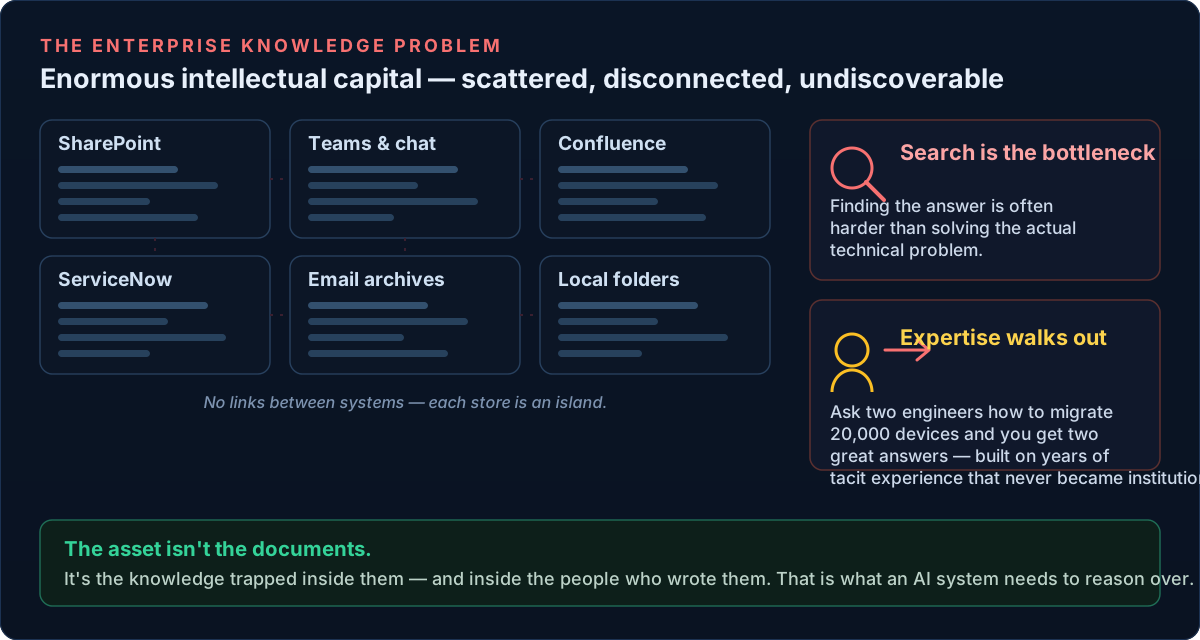
The asset was never the documents. It’s the knowledge trapped inside them — and inside the people who wrote them.
Here’s the example I keep coming back to. Ask two experienced engineers how to migrate twenty thousand Windows devices from Configuration Manager to Intune, and you’ll get two genuinely good answers. Both reflect years of scar tissue — the pilot-ring sequencing that worked, the co-management gotcha that cost a weekend, the one application that refused to package. Almost none of that becomes institutional knowledge. It lives in their heads, and when they move to the next account, most of it walks out the door with them. We rehire the experience we already paid for, over and over.
From documents to knowledge
Traditional knowledge management assumes the document is the asset. AI quietly overturns that. The document is just raw material; the asset is the knowledge you can extract from it.
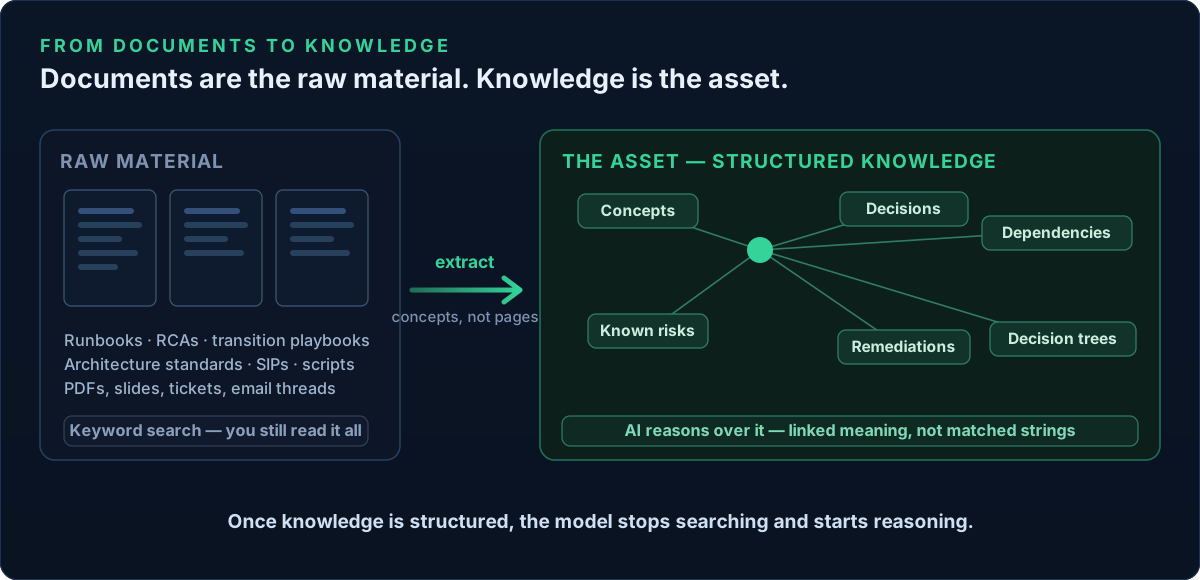
Once knowledge is structured, the model stops searching and starts reasoning.
Instead of storing twenty thousand PDFs and hoping search finds the right one, the move is to build structured knowledge around what actually matters: technical concepts, architecture decisions and the reasoning behind them, operational dependencies, known risks, proven remediations, customer standards, decision trees, lessons learned. Once that knowledge is structured and linked, an AI can reason across it rather than pattern-match keywords against a blob of text. That difference — between retrieving a document and reasoning over knowledge — is the whole ballgame.
From one assistant to a team of specialists
Today’s enterprise “AI assistant” usually behaves like a clever generalist chatbot bolted onto a search index. It’s fine. It is not how the best organisations will operate in three years. The shape I expect to win is a team of specialist Knowledge Agents, each deep in one domain, sitting on a shared knowledge layer, with an orchestrator routing each question to the right expert.
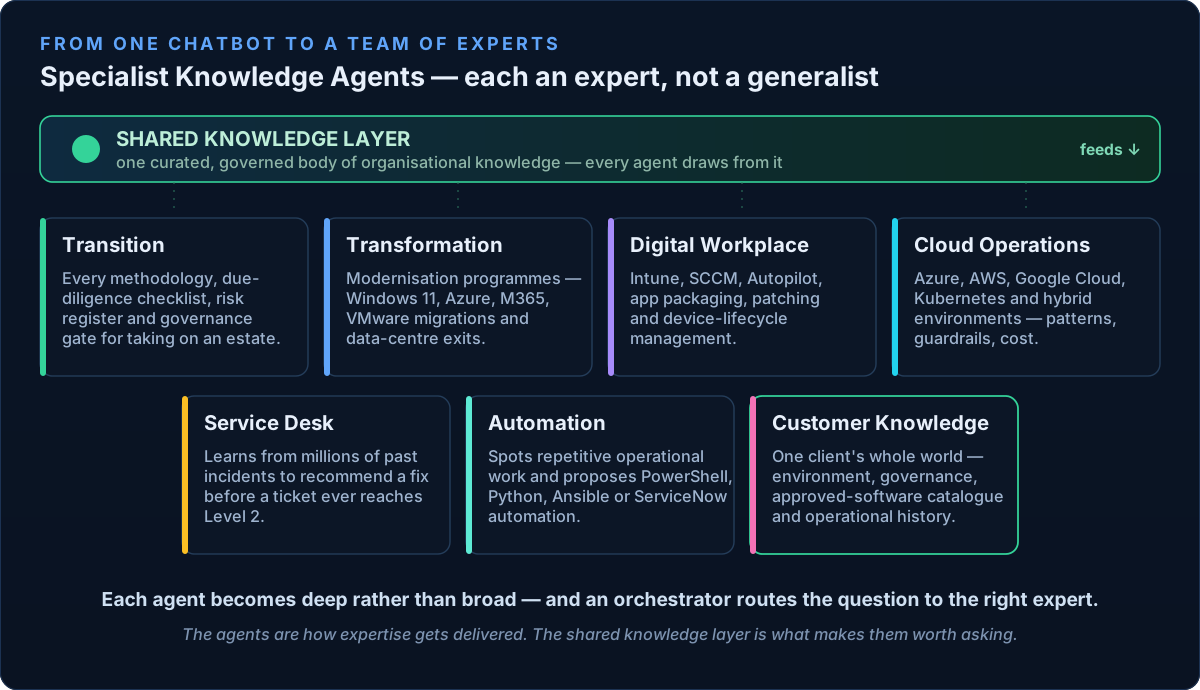
Each agent becomes deep rather than broad. The shared knowledge layer is what makes them worth asking.
Picture a global organisation running not one generic assistant but a bench of experts. A Transition Agent that knows every methodology, due-diligence checklist, risk register and governance gate. A Transformation Agent specialised in modernisation — Windows 11, Azure, Microsoft 365, VMware migrations, data-centre exits. A Digital Workplace Agent fluent in Intune, Configuration Manager, Autopilot, packaging, patching and device lifecycle. A Cloud Operations Agent across Azure, AWS, Google Cloud, Kubernetes and the messy hybrid between. A Service Desk Agent that has read millions of historical incidents and recommends a fix before a ticket reaches Level 2. An Automation Agent that spots toil and proposes the PowerShell, Python, Ansible or ServiceNow flow to kill it. And a Customer Knowledge Agent holding one client’s entire world — environment, governance, standards, approved-software catalogue, operational history. Each is an expert instead of trying to know everything. Depth beats breadth when the questions are this specialised.
The half of the problem everyone skips
Here’s where my two earlier pieces connect. An agent needs two distinct things to be useful in production, and they’re easy to confuse. It needs to act — call live systems, execute changes, under governance and audit. And it needs to know — be grounded in the accumulated knowledge of the estate it operates on. The first is the agent fabric. The second is the knowledge layer.
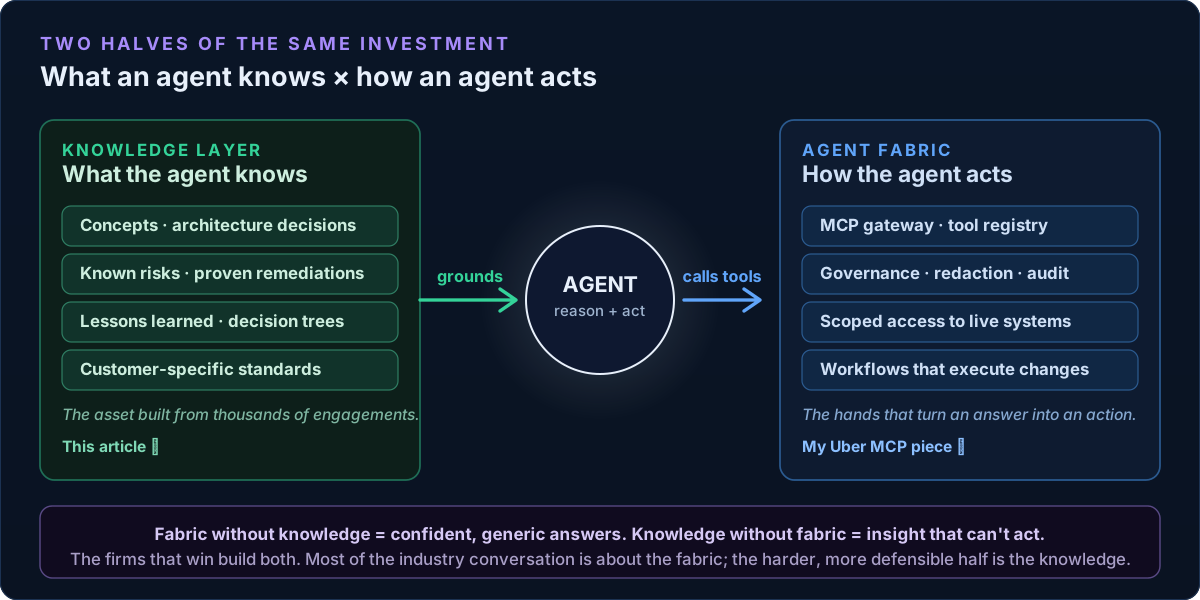
Fabric without knowledge gives you fast, confident, generic answers. Knowledge without fabric gives you insight that can’t act. The firms that win build both.
Almost all of the market’s energy is going into the fabric — MCP, gateways, tool registries — because it’s concrete and demos well. I’m as guilty as anyone; that’s what I wrote about first. But a beautiful agent fabric on top of no real knowledge layer just gives you a very fast way to produce confident, generic, sometimes wrong answers. The knowledge layer is harder to build, slower to show off, and far more defensible once you have it. Nobody can clone your twenty years of incidents.
Better knowledge beats bigger models
The instinct, when an AI answer disappoints, is to reach for a bigger model. In the enterprise that’s usually the wrong lever. Most questions that matter in infrastructure delivery don’t hinge on raw reasoning horsepower; they hinge on access to accurate organisational knowledge.
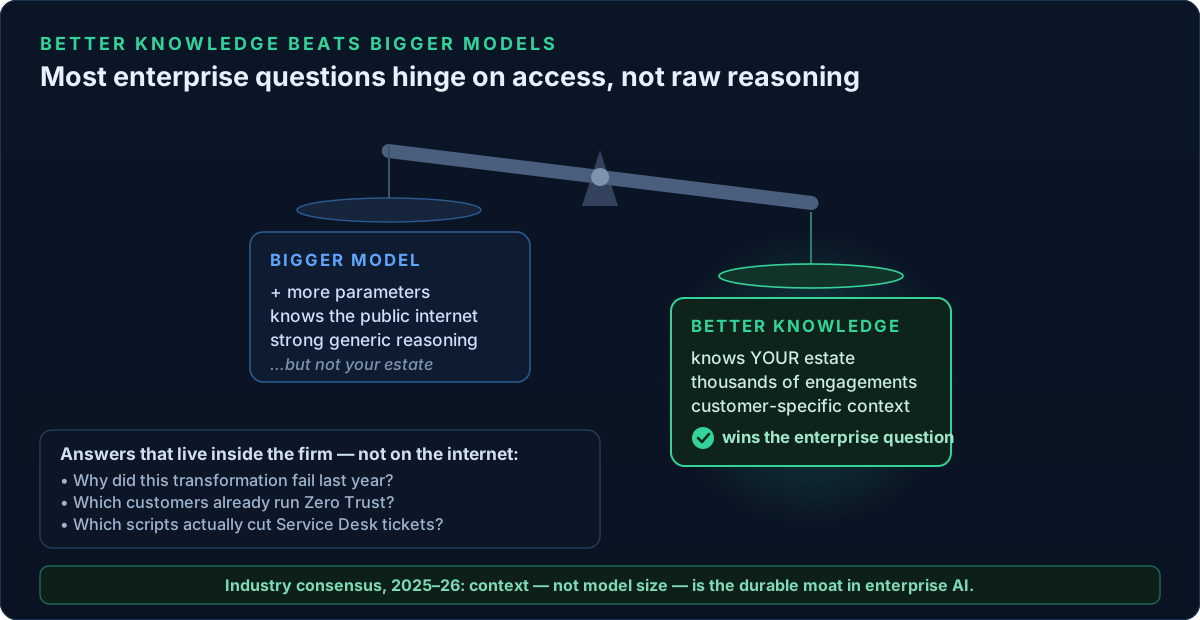
Industry consensus through 2025–26: context, not model size, is becoming the durable competitive moat.
Consider what actually gets asked on an account. Why did this transformation fail last year? Which of our customers already run Zero Trust, and how? What were the real risks during our last Windows 11 rollout? Which automation scripts measurably cut Service Desk volume? What did we learn in the last data-centre migration that we must not repeat? None of those answers live on the public internet. They live inside the organisation. No amount of model capability conjures them; only better-organised knowledge surfaces them.
But doesn’t Copilot already do this?
It’s the first question in every room, and a fair one. Microsoft 365 Copilot, ServiceNow’s assistants and the rest are genuinely useful — but they mostly sit on documents and answer the question in front of them. They search, summarise, respond, and forget. A Knowledge Agent sits on structured, governed knowledge and is built to understand the decisions inside the documents, recommend the next action, and get sharper with every engagement.
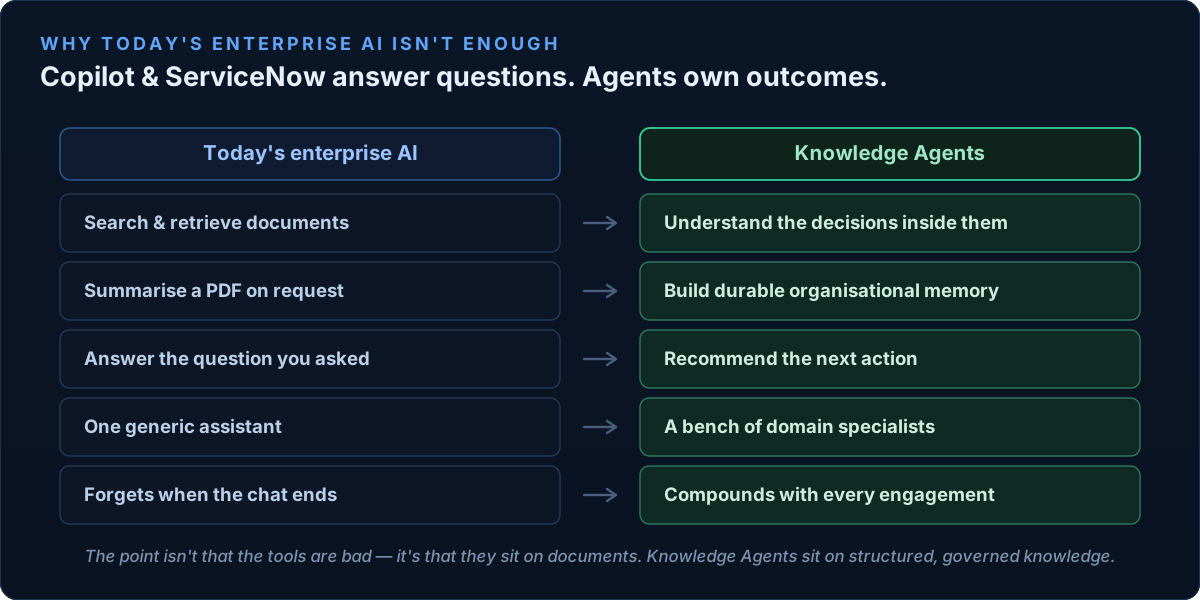
The point isn’t that the tools are bad — it’s that they sit on documents. Knowledge Agents sit on structured, governed knowledge.
The distinction isn’t vendor rivalry; you’ll likely run Copilot and a knowledge layer. It’s architectural. A generic assistant on an ungoverned document store gives fast, plausible answers. Specialist agents on a curated knowledge graph give answers you can act on, in your domain, grounded in what your organisation actually learned. The moat isn’t the assistant — it’s the knowledge underneath it, and that’s the part no vendor can ship you.
What this looks like on a real account
Let me make it concrete with the scenario every delivery lead recognises: a Priority-1 incident. A composite client — numbers illustrative — with a major outage in progress and a bridge call filling up.
In the world we mostly live in today, the clock burns on the hunt. Triage the symptom. Try to remember whether something like this happened before. Ping three people who might know. Dig for the old RCA in a closed problem record. Reconstruct the remediation from half-memory. Only then apply the fix. The repair is often the short part; the search for context around it is the long part.
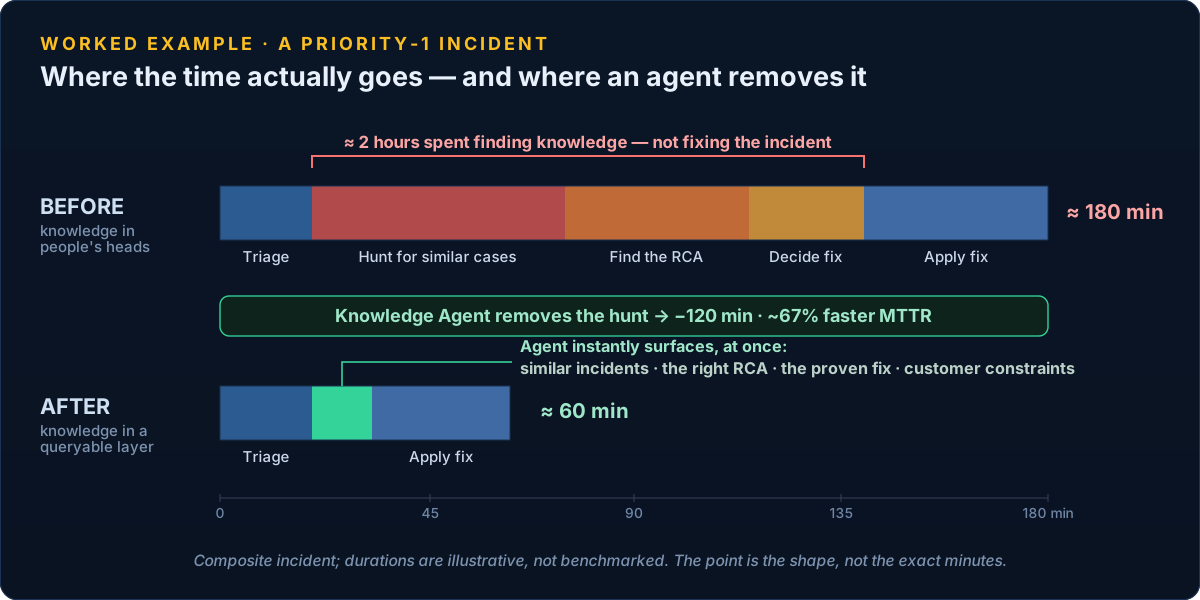
Composite incident; durations are illustrative. The point is the shape, not the exact minutes.
Now drop a Service Desk Knowledge Agent into the same incident. The moment the symptom is described, it surfaces the similar incidents, the relevant RCAs, the remediation that actually worked last time, the related changes in the recent window, the known vendor issue if there is one, and the customer constraints that rule certain actions out. The engineer spends their time deciding and fixing, not excavating, and mean-time-to-resolve collapses from the order of three hours to about one — not because anyone is smarter, but because the knowledge that was always there is finally instantly available.
The same pattern repeats across the lifecycle. In transition and transformation, the hundreds of lessons that currently die in closure decks become a running memory, so the next project starts with the experience of the last hundred. In presales, teams stop rebuilding the same diagrams and cost models and instead reuse proven patterns and comparable implementations. In workplace modernisation — timely, since Microsoft has put Configuration Manager on an annual cadence and openly calls Intune “the future of device management” — an agent weighs device readiness, app compatibility, deployment waves and known issues against hundreds of prior migrations. And in continuous service improvement, the monthly governance grind becomes something an agent reads for recurring themes and emerging risk.
The economics: knowledge compounds, labour doesn’t
Executives don’t fund a thesis; they fund a number. So here’s the shape of the business case — illustrative, not benchmarked, and exactly the kind of model you should prove on one account before quoting it anywhere.
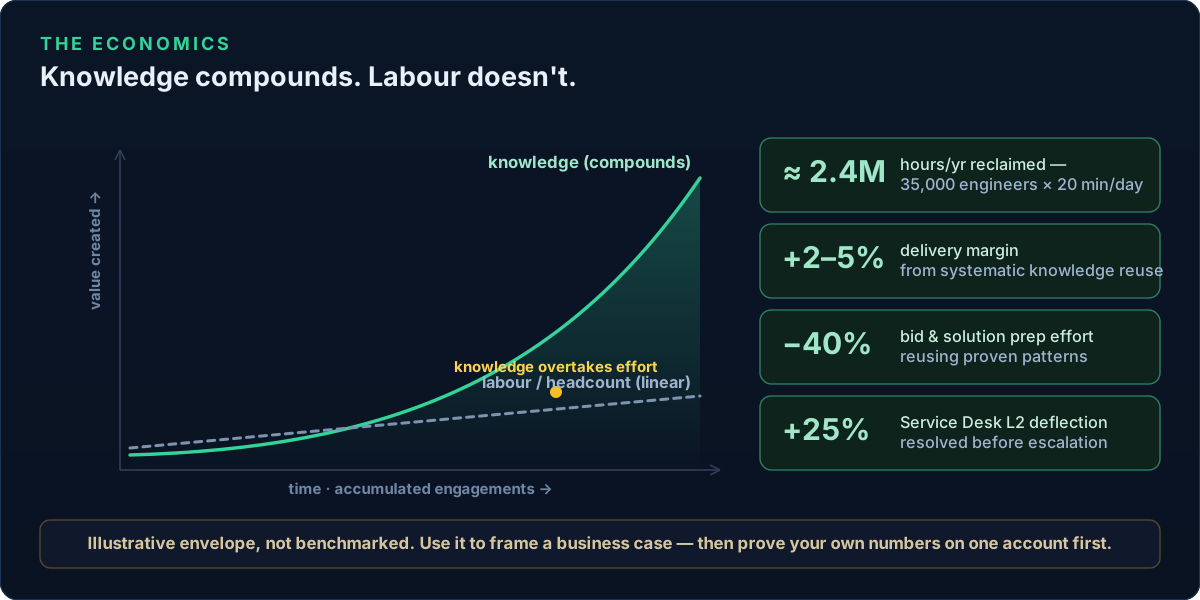
Illustrative envelope, not benchmarked. Use it to frame a business case — then prove your own numbers on one account first.
Take a $1B provider with 35,000 engineers. If a knowledge layer reclaims just twenty minutes a day per engineer — the time lost hunting for context — that’s on the order of 2.4 million productive hours a year handed back. Translate the same effect into the commercials and a coherent envelope appears: delivery margin up two to five points from systematic reuse, bid and solution-prep effort down around 40% as proven patterns stop being rebuilt, and Service Desk L2 deflection up a quarter as the Service Desk Agent resolves before escalation.
The deeper point survives whatever the exact figures turn out to be: labour scales linearly and knowledge compounds. Add an engineer and you get one engineer’s output. Add a resolved incident to a well-built knowledge layer and you make every future incident a little cheaper to resolve — forever. That gap is the entire investment case.
Building the knowledge layer
None of this falls out of pointing a vector database at a SharePoint. A Knowledge Agent is only as good as the knowledge engineering underneath it, and that’s a discipline, not a product you buy.
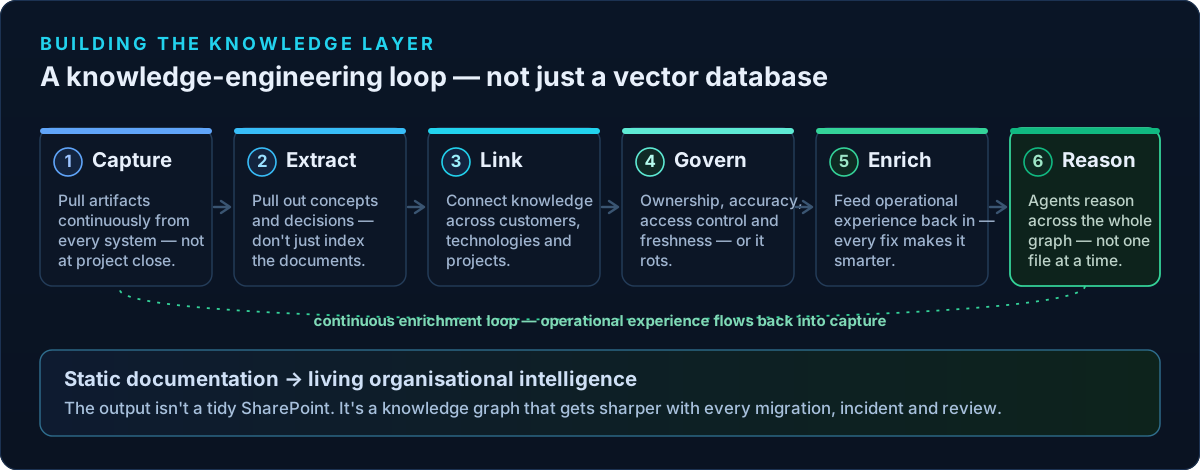
The output isn’t a tidy document store. It’s a knowledge graph that sharpens with every migration, incident and review.
The loop is six moves. Capture artifacts continuously, as work happens, not in a doomed end-of-project scramble. Extract concepts and decisions rather than indexing documents. Link knowledge across customers, technologies and projects so the graph has structure. Govern it. Enrich it from live operational experience. And only then let agents reason across the interconnected whole instead of one isolated file at a time.
That fourth step is the one people underestimate. Governance is the hard part, not the pipeline. Knowledge goes stale, documents contradict each other, and an agent that confidently cites a retired standard is worse than no agent at all. So every item needs an owner, a freshness date and a confidence score; conflicts need a resolution path; and anything an agent is about to act on needs a human validation gate until trust is earned. Treat the knowledge base like production code — reviewed, versioned and aggressively pruned — not like a document graveyard. Done well, this turns static documentation into a living organisational intelligence that compounds.
A knowledge maturity model
If you want to know where you actually stand, it helps to have a ladder.
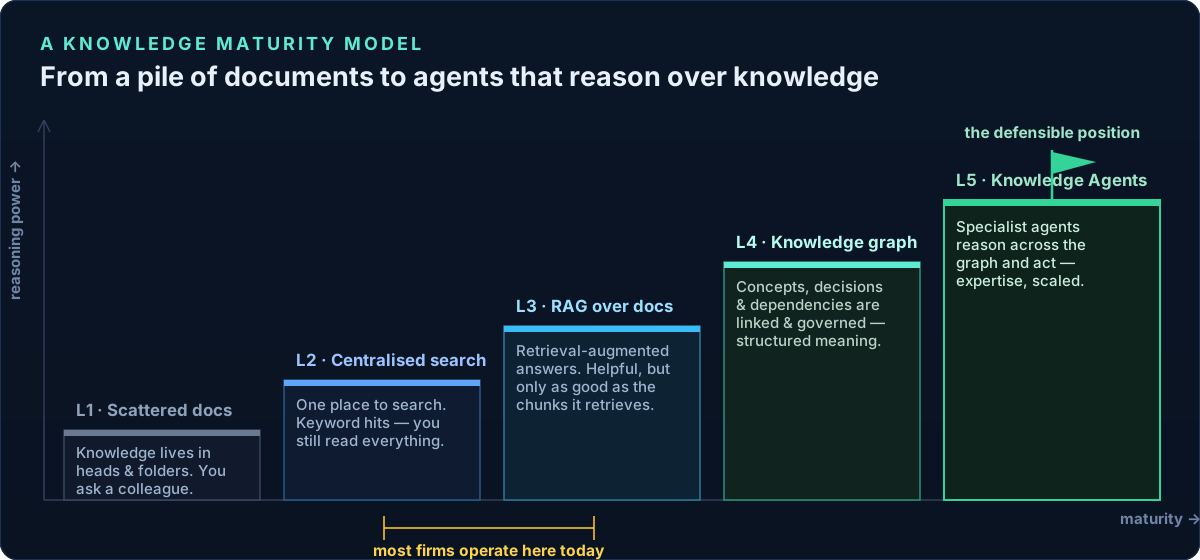
Most firms operate around Level 2 to 3 today. The gap to Level 5 is mostly engineering discipline, not model access.
Level 1 is scattered documents — knowledge in heads and folders; retrieval means asking a colleague. Level 2 is centralised search — one place to look, but you still read everything. Level 3 is RAG over documents — helpful, and where many “enterprise AI” pilots land, but only as good as the chunks it retrieves. Level 4 is a structured knowledge graph — concepts, decisions and dependencies linked and governed. Level 5 is reasoning Knowledge Agents that reason across that graph and act. Most firms I see sit around Level 2 to 3, and the climb from there is mostly engineering discipline and governance — not a better model.
How to start: a phased roadmap
The vision is easy to nod along to and easy to stall on, because it can look like boiling the ocean. It isn’t, if you sequence it so each phase ships value alone.
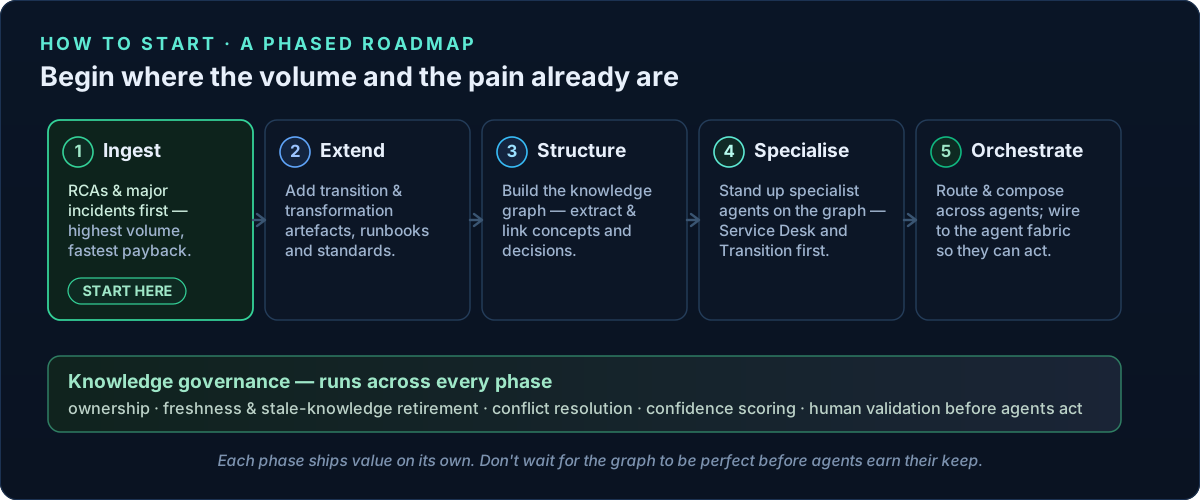
Each phase ships value on its own. Don’t wait for the graph to be perfect before agents earn their keep.
Start where the volume and the pain already are: ingest RCAs and major-incident records first — highest volume, fastest payback, and a Service Desk Agent that earns trust quickly. Then extend to transition and transformation artefacts, runbooks and standards. Then structure — extract and link concepts into a real knowledge graph rather than a bigger search index. Then specialise, standing up domain agents on that graph. Finally orchestrate, routing across agents and wiring them to the agent fabric so they can act, not just advise. Governance runs across all five phases — never bolted on at the end.
Why enterprise CIOs should care
So far this reads as a provider’s playbook. But the same asset changes the buy for the CIO on the other side of the table — and that’s what makes it more than an internal efficiency story.
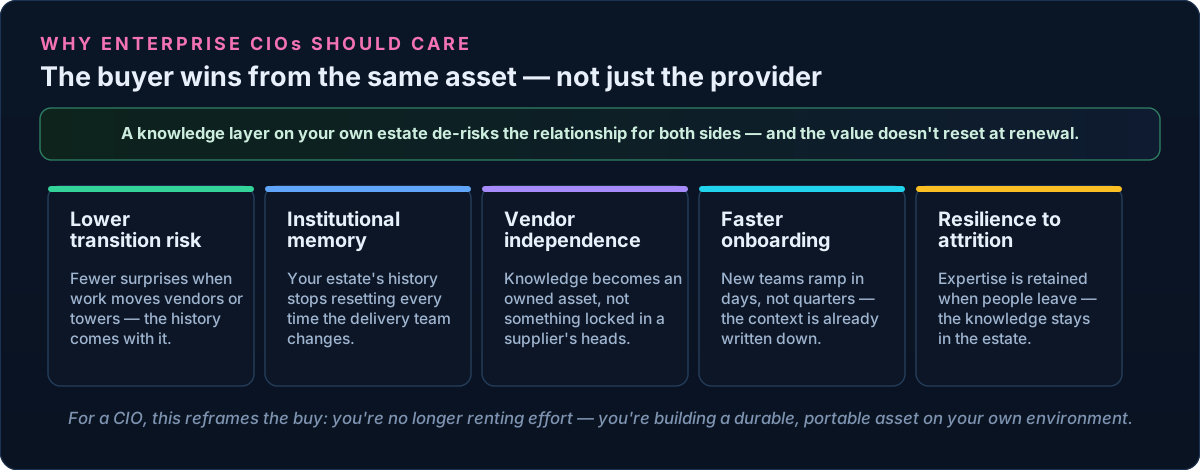
For a CIO, this reframes the buy: you’re no longer renting effort — you’re building a durable, portable asset on your own environment.
A knowledge layer built on your estate lowers transition risk, because the history moves with the work instead of evaporating at every handover. It gives you institutional memory that doesn’t reset when the delivery team rotates. It buys vendor independence — the knowledge is an owned, portable asset, not something locked in a supplier’s heads. It cuts onboarding from quarters to days. And it makes you resilient to attrition, because expertise stays in the estate when people leave. Reframed that way, the conversation stops being about rate cards and starts being about who helps you build a durable asset on your own environment.
The fifth wave
Step back far enough and infrastructure outsourcing has moved through a sequence of waves, each commoditising the last.
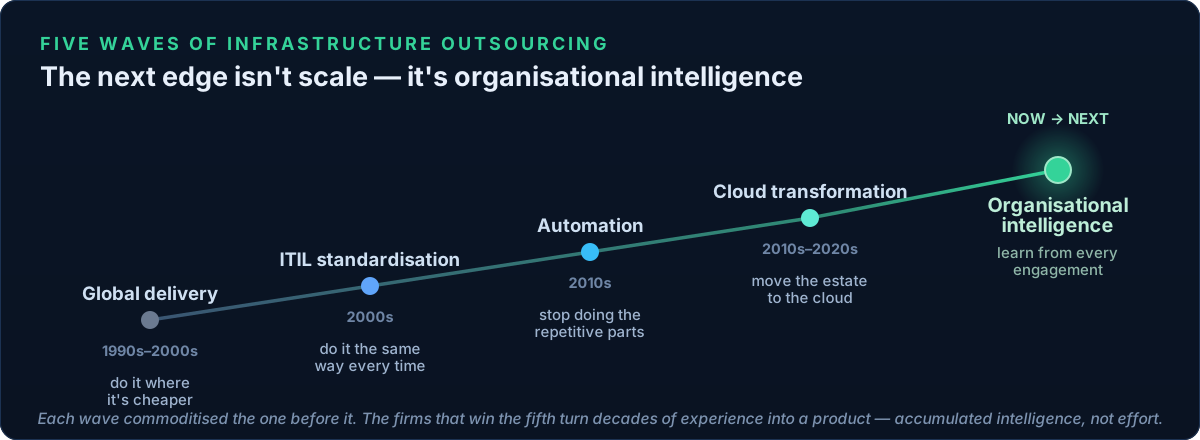
Each wave commoditised the one before it. The firms that win the fifth turn decades of experience into a product.
Global delivery moved work to where it was cheaper. ITIL standardisation made it repeatable. Automation stripped out the repetitive parts. Cloud transformation moved the estate itself. The fifth wave, the one we’re at the start of, is organisational intelligence: systematically capturing and operationalising decades of experience so the firm learns from everything it does. Its winners won’t be whoever licensed the largest model — they’ll be whoever turned thousands of engagements into queryable, compounding intelligence.
For Indian IT the timing is good. The sector is on track to cross roughly $315 billion by the end of 2026 and already accounts for close to a tenth of the country’s GDP. A single provider may run 500-plus accounts, millions of managed devices and tens of thousands of engineers — and yet the expertise still mostly stays trapped inside individual delivery teams. That’s exactly the gap a knowledge layer closes: the mechanism for turning one team’s project experience into reusable enterprise capability. The shift is from selling capacity and effort to delivering accumulated intelligence.
One step further: the transformation stack
Zoom out past outsourcing and the same idea sits inside a bigger picture.
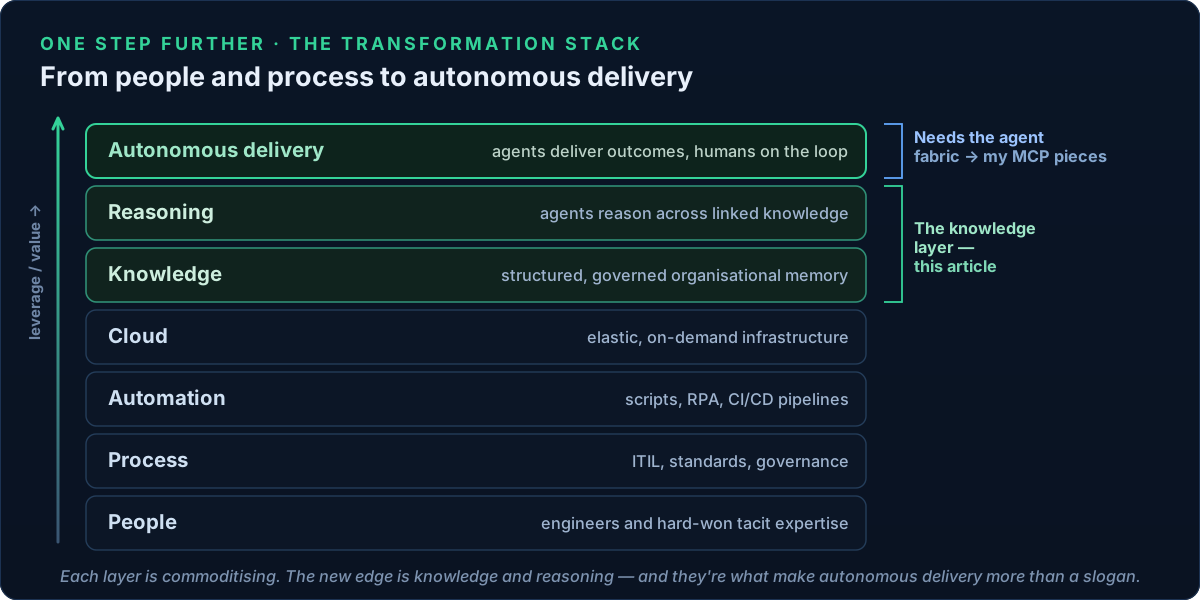
The new edge is knowledge and reasoning — and they’re what make autonomous delivery more than a slogan.
We’ve layered value for decades: people, then process, then automation, then cloud. Knowledge and reasoning are the next two layers, and they’re the ones that finally make autonomous delivery something more than a slogan. Reasoning runs on the knowledge layer this article is about; autonomy runs on the agent fabric I covered in the MCP pieces. Put the two together and you have the architecture for the next decade.
That move — from managing infrastructure to continuously learning from it — is the most significant differentiator the industry has in front of it. The fabric is how the agents act. The knowledge is what makes them worth asking. Build both, but don’t kid yourself about which half is harder.
Sources & Notes
The “context is the moat / context engineering” framing that I treat as industry backdrop is drawn from publicly available 2025–26 writing, including IBM, project44 and the Alibaba Cloud engineering blog.
The Indian IT sector figures — roughly $315B by end of 2026 and close to 10% of GDP — are from industry round-ups such as this 2026 ranking; treat sizing numbers as approximate and verify against primary NASSCOM data before quoting them anywhere that matters.
The Configuration Manager / Intune direction — Microsoft moving ConfigMgr to an annual release cadence and positioning Intune as the future of endpoint management — is reported by Computerworld and Petri; confirm against Microsoft Learn for the exact version cadence before building a migration business case on it.
The agent taxonomy, the Priority-1 walk-through, the economic envelope (the ~2.4M-hours figure, the margin / bid-prep / deflection ranges), the comparison with current tools, the knowledge-engineering loop, the maturity model, the phased roadmap and the CIO benefits are my extrapolation based on fifteen years in infrastructure delivery — a starting hypothesis for a business case, not a benchmarked result. The composite client and all numbers are illustrative; prove them on one account before you put them in a deck.
This piece is the knowledge-layer companion to my two pieces on the agent fabric: the long-form MCP playbook and the executive briefing. Corrections and counter-evidence are welcome.

About the Author
Ajay Walia
AI {IT Architect} focusing on local-first multi-agent AI engineering, zero-data-egress systems. Ideator, Creator and Executor on Curious Bit.
Keep Reading

When AI Agents Go Wrong — and How to Engineer Ones That Don't
Two real AI failures, two domain safeguard designs, and the responsible-AI thinking that connects them. My write-up from a mini project on agent risk, ethics, and governance.
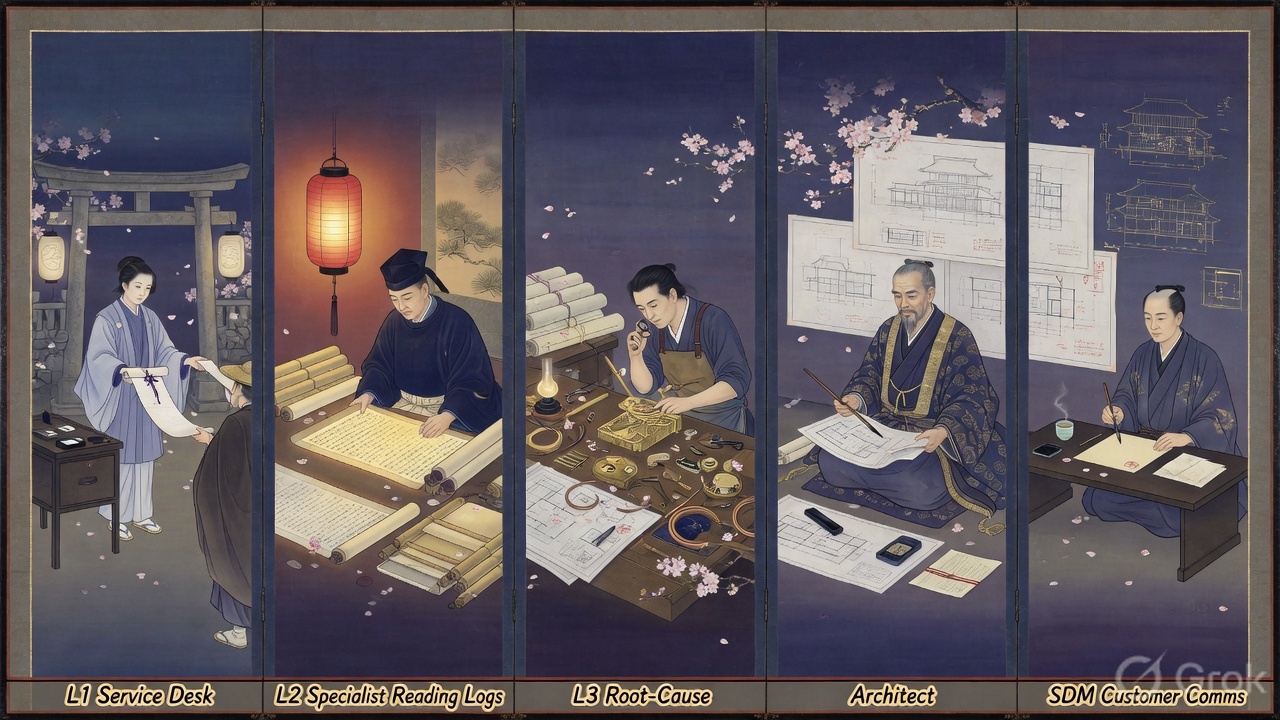
Cortex Swarm: Upgrading the Traditional IT Operations with Agentic AI
An idea piece: how Digital Workplace Operations teams are structured today, where agentic AI is heading, and how a five-agent swarm can replace the follow-the-sun model — same SLA, 24×7 coverage, multilingual by default, with a hash-chained audit trail any G500 internal-audit team can verify in one click.

Essential Skills for the AI Era — What former British PM Says You Actually Need
AI is reshaping every job. The World Economic Forum, McKinsey, and peer-reviewed research agree on 17 skills that will define who thrives. Here they are — with how to build each one.