
Reachy Mini Is a $299 Open-Source Robot With a Hugging Face App Store — And 10,000 People Already Have One
Pollen Robotics and Hugging Face just shipped an agentic app store for Reachy Mini — a desktop robot you assemble yourself, control with Python, and extend with AI apps built in plain English. Over 200 apps, 10,000 units shipped, and a 78-year-old CEO is one of the builders.
On this page
Reachy Mini is a small, open-source desktop robot made by Pollen Robotics and sold through Hugging Face. It has an expressive head, motors you can program in Python, a microphone, and a camera. You buy it as a kit, spend an afternoon assembling it, and then it is yours — hardware, software, and all.
Last week, Hugging Face shipped an agentic app store for it. Describe what you want in plain English, an AI agent writes the code and ships it to the robot, and you iterate from there. Over 200 apps are already live, built by 150+ creators, most of whom had never written a line of robotics code.
What Is Reachy Mini, Exactly
Reachy Mini is a tabletop robot — roughly the size of a desktop lamp — with an articulated head that can nod, tilt, and look around. It comes in two versions:
Reachy Mini (Wireless): Runs onboard on a Raspberry Pi 4. Battery-powered, WiFi-connected, fully autonomous. No cable to your computer required. This is the full experience.
Reachy Mini Lite: Powered via wall outlet and connected to your computer via USB. Designed for developers who want to prototype fast without worrying about battery or wireless configuration.
Both versions ship as kits. Assembly takes two to three hours following the step-by-step guide, and the hardware design files are open-source under Creative Commons BY-SA-NC — meaning you can inspect, mod, and even print replacement parts.
The software stack is Apache 2.0 open-source: Python SDK, a REST API, a JavaScript SDK for web apps, and native LLM integrations baked in.
The App Store Built on Hugging Face Spaces
Every Reachy Mini app lives on the Hugging Face Hub as an open-source repo. Searchable, forkable, and one-click installable directly from the robot’s dashboard. See an app you like? Fork the repo, ask an AI agent to modify it, publish your version. The original creator gets credit, you get a working variant in minutes.
Every app also runs in a browser-based MuJoCo simulator, so you can play with the full catalog without owning the hardware at all.
As of this week, the numbers are:
- 200+ apps published
- 150+ unique creators — most first-time robotics builders
- ~10,000 units shipped worldwide, with 1,000+ more going out in the next 30 days
What People Are Actually Building
This is the part worth paying attention to. A sample of what is already live in the app store:
Cook Assistant — walks you through a recipe step by step, hands-free. The robot reads the steps aloud, waits for confirmation, and moves to the next.
Language Tutor — listens to your spoken language practice, corrects accent and grammar in real-time.
Emotional Damage Chess — plays chess and reacts expressively to every move. It drops its head on a blunder (“Oh no! Big mistake!”) and cheers on a winning combination.
Reachy Phone Home — watches your desk with the camera and calls you back to work when you pick up your phone.
Red Light, Green Light — the Squid Game version, with Reachy Mini playing the doll. It turns, watches, and catches you moving.
F1 Race Commentator — calls Formula 1 races live from your desk as they happen.
Coding Teacher — teaches kids to program in a simplified scripting language, with the robot as the interactive tutor.
Plus radio, home assistants, video games, dance apps, blind tests, and more being added daily.
Joel Cohen, Age 78, Built a CEO Facilitation Robot
The story that illustrates what this platform actually unlocks:
Joel Cohen runs CEO peer groups in the Raleigh-Durham area. He has never worked in robotics. He has never written code. It took him a few days to assemble his Reachy Mini Lite — he misplaced some screws — and then he built an app.
His app is a voice-controlled AI co-facilitator for the CEO peer groups he runs on Zoom. Reachy Mini sits on his desk. When he says “Hey Reachy,” it wakes up and listens. It has a personality (his VP of Future Thinking), four facilitation modes, a bank of 60+ questions, and greets each of his 29 members by name. Mid-session, it can hot-seat a member, push back on a surface-level answer, generate a fresh question, or summarise the key themes before closing.
His description of the build process: “I built this by describing what I needed in plain English. Claude wrote the code. No SDK. No robotics background. No developer experience.”
A 78-year-old executive in North Carolina built a robotics product — in under a week — that did not exist last month.
The Agentic Toolkit: How Building Works
The new toolkit lets you describe the robot behaviour you want in plain English and an AI agent handles the rest — writing the code, running it against the simulator, shipping it to the robot, and iterating with you until it works.
The prompt they recommend to get started:
Help me build a Reachy Mini app that waves and says hello when
someone walks into the room.

Use the open-source code at https://github.com/pollen-robotics/reachy_mini
and the docs at https://huggingface.co/docs/reachy_mini/index
For those who want to go deeper, the Python SDK is clean and minimal:
from reachy_mini import ReachyMini
from reachy_mini.utils import create_head_pose

with ReachyMini() as mini:
    mini.goto_target(
        head=create_head_pose(z=10, roll=15, degrees=True, mm=True),
        duration=1.0
    )
Three lines to move the head. The full SDK covers motion, vision, speech input, audio output, and LLM integration.
Cost and Where to Get It
Reachy Mini starts at $299 for the Lite version. Pricing for the full Wireless model is listed at hf.co/reachy-mini, where you can also browse the app store and access the simulator without buying hardware.
The software, docs, and all 200+ apps are free and open-source. The hardware design files are open-source too. Pollen Robotics took a deliberate decision not to build a closed app store with a revenue cut — everything is forkable, auditable, and improvable by anyone.
Why This Matters
The closest parallel Hugging Face draws is the iPhone App Store in 2008 — turning a device made by one company into a platform anyone could build for. The difference here is that the hardware is open-source, the software is open-source, the apps are open-source, and the AI agent that writes your code runs on a public hub. The whole stack is forkable.
For enterprise and digital workplace practitioners, the more immediate signal is this: the barrier to building custom robotics behaviour just collapsed. The expertise is supplemented by an agent. The hardware is affordable. The integration is a public repo on a platform 40 million developers already use.
What used to take a robotics team six months now takes an afternoon — and a 78-year-old with no coding background just proved it.
Browse the app store: huggingface.co/reachy-mini#/apps · Docs: huggingface.co/docs/reachy_mini

About the Author
Ajay Walia
AI {IT Architect} focusing on local-first multi-agent AI engineering, zero-data-egress systems. Ideator, Creator and Executor on Curious Bit.
Keep Reading
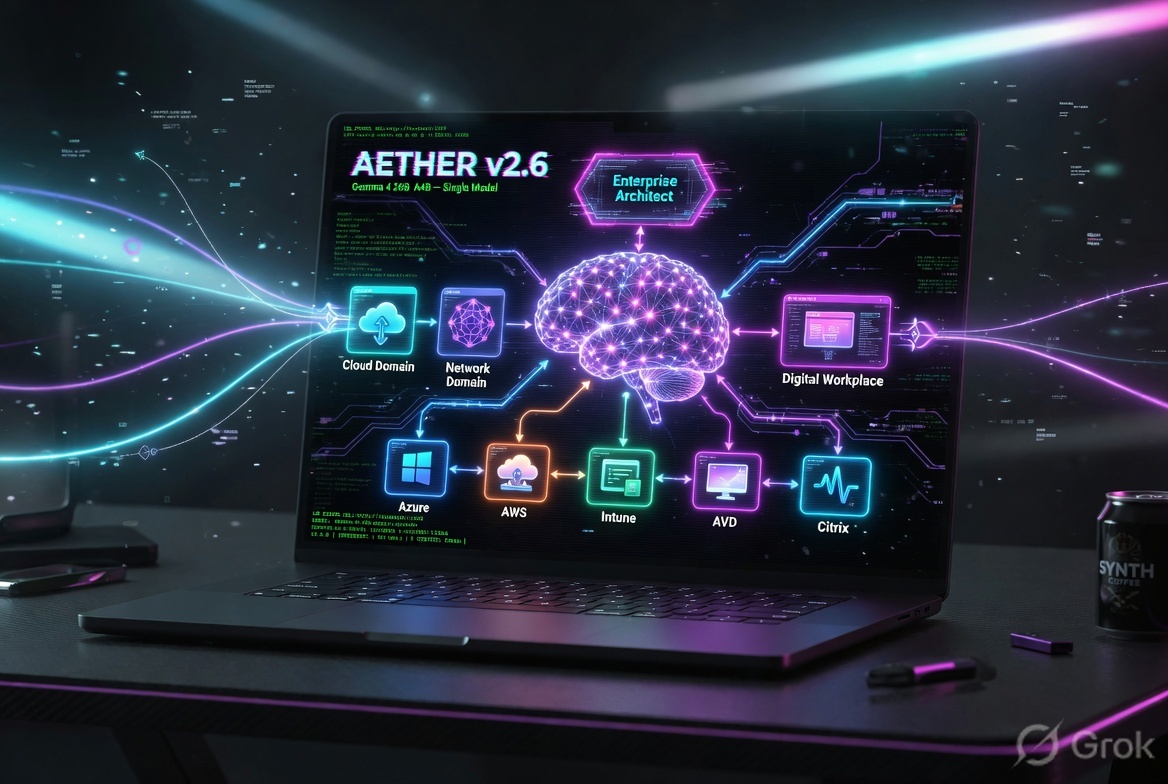
I Built a Team of IT Architects using LLM That Live on MacBook — Meet Aether
How I built Aether — a local-first, multi-agent AI system that runs 10 specialist IT architecture advisors on a single MacBook M5 Pro, with no cloud, no API costs, and zero data egress.

Attention Is All You Need — The Paper That Rewired AI
The 2017 paper that killed RNNs, invented the Transformer, and launched the modern AI era — explained for beginners and intermediates with 11 original manga panels.

OpenAI Just Killed the Voice Assistant — And Built Something Far More Dangerous
GPT-Realtime-2 doesn't just answer questions — it reasons out loud, calls tools mid-sentence, and translates 70 languages live. The voice assistant era is over. The voice agent era has begun.